
Kitchen, frying pans, buying guides
Which frying pan size do you need? Start with dinner
Eggs, mushrooms or a piece of chicken: when the difference between 20, 24 and 28 cm matters.
Published: 14/09/2026, 2 min read
Which frying pan size suits you?
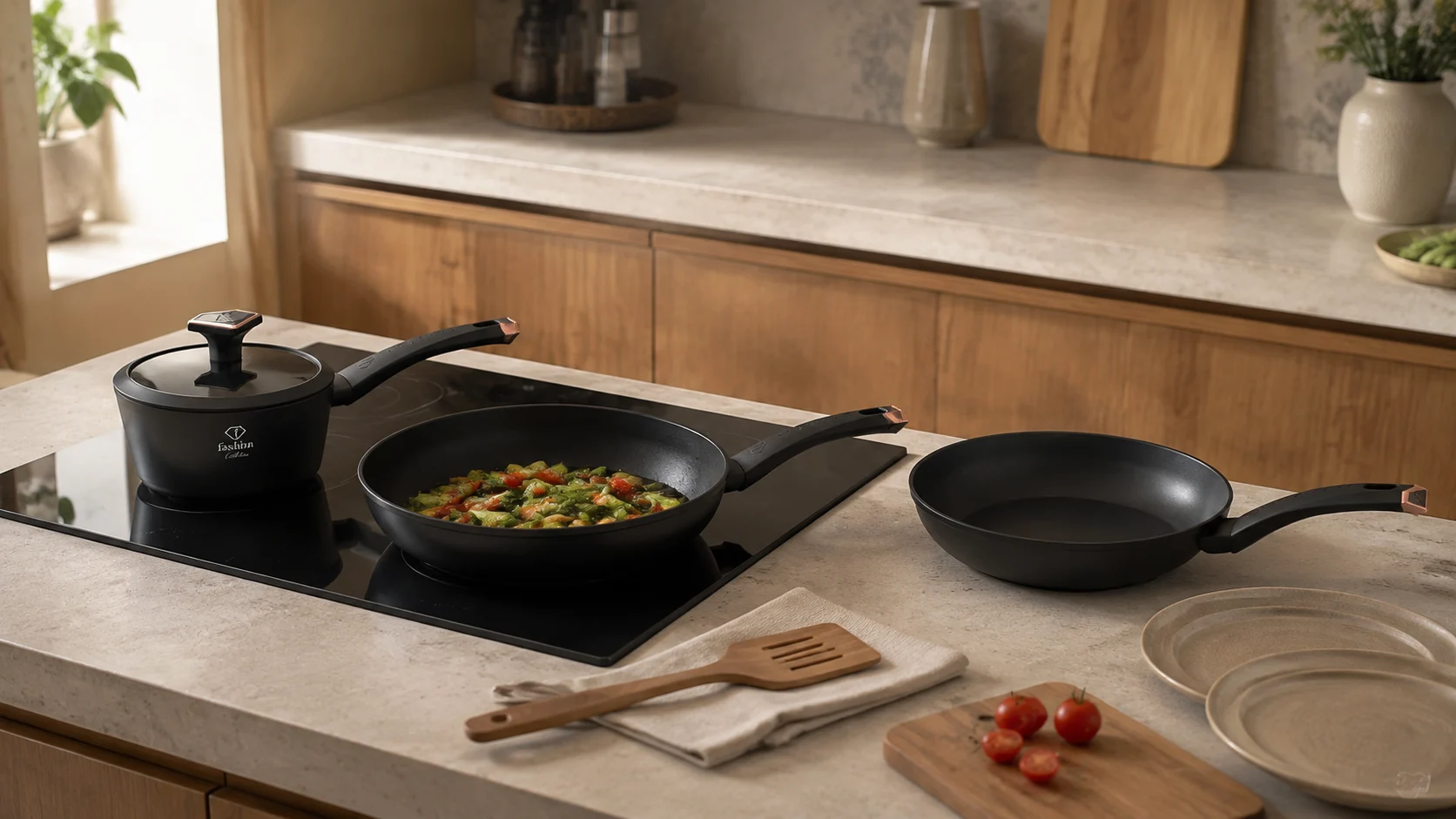
Look at how your usual meal fits across the bottom of a pan. A 20 cm pan can suit a small breakfast, 24 cm is a useful starting point for everyday frying, and 28 cm gives larger pieces more room. You should be able to turn the food comfortably and still fit your saucepan beside it on the hob.
Mushrooms are piled up, pieces of meat overlap and there is barely room for the spatula. You need more cooking surface. If a little scrambled egg leaves you washing a large pan every morning, a smaller one would do a different, useful job.
What does the diameter on the box mean?
The stated size is the diameter across the upper rim. The flat surface inside can be smaller, especially when the sides slope outwards. Compare the shape with a pan you already like and check the detailed measurements. Rim shape also matters when you choose a lid.
When would you use it?
| Criterion |  5,590 Ft |  7,190 Ft |  8,790 Ft |
|---|---|---|---|
| Size | 20 cm | 24 cm | 28 cm |
| Everyday task | A little egg or a separate side dish | Meat, mushrooms and sautéed vegetables | Larger pieces and more room for turning |
| Check first | Will the hob detect the smaller base? | Will your saucepan fit beside it? | Is there space for the handle and neighbouring cookware? |
Which one to pick?
Diameter is not a precise serving count. Sliced food takes up space differently from chopped ingredients.
Try the layout before you choose
- Put your current pan on the cooking zone you use most.
- Place the saucepan for your usual side dish next to it.
- Hold the handle and try the stirring movement. Rims and handles should not get in each other’s way.
Give a second pan a different job. Pair a breakfast pan with a larger frying surface; choose a deeper, lidded shape for dishes that finish in a sauce. That gives both pans a reason to come out of the cupboard.
Find the size your cooking needs
The 20, 24 and 28 cm Fashion by Berlinger Haus frying pans have TitanPro coating and induction-compatible bases. Open the size that fills a real gap alongside the pan you already use.
Non-stick frying pan, 20 cm
20 cm size for smaller portions
Black rose gold, Black Rose
In stock
5,590 FtNon-stick frying pan, 24 cm
24 cm middle size for everyday meals
Black rose gold, Black Rose
In stock
7,190 FtNon-stick frying pan, 28 cm
28 cm cooking surface with room to turn food
Black rose gold, Black Rose
In stock
8,790 Ft