
Make a chilly room more comfortable
Planning some extra warmth? Start with where you like to sit, then work out when the room actually needs heating.
You can see the available delivery methods at checkout.You can see the available delivery methods at checkout.
Last updated: 17/09/2026
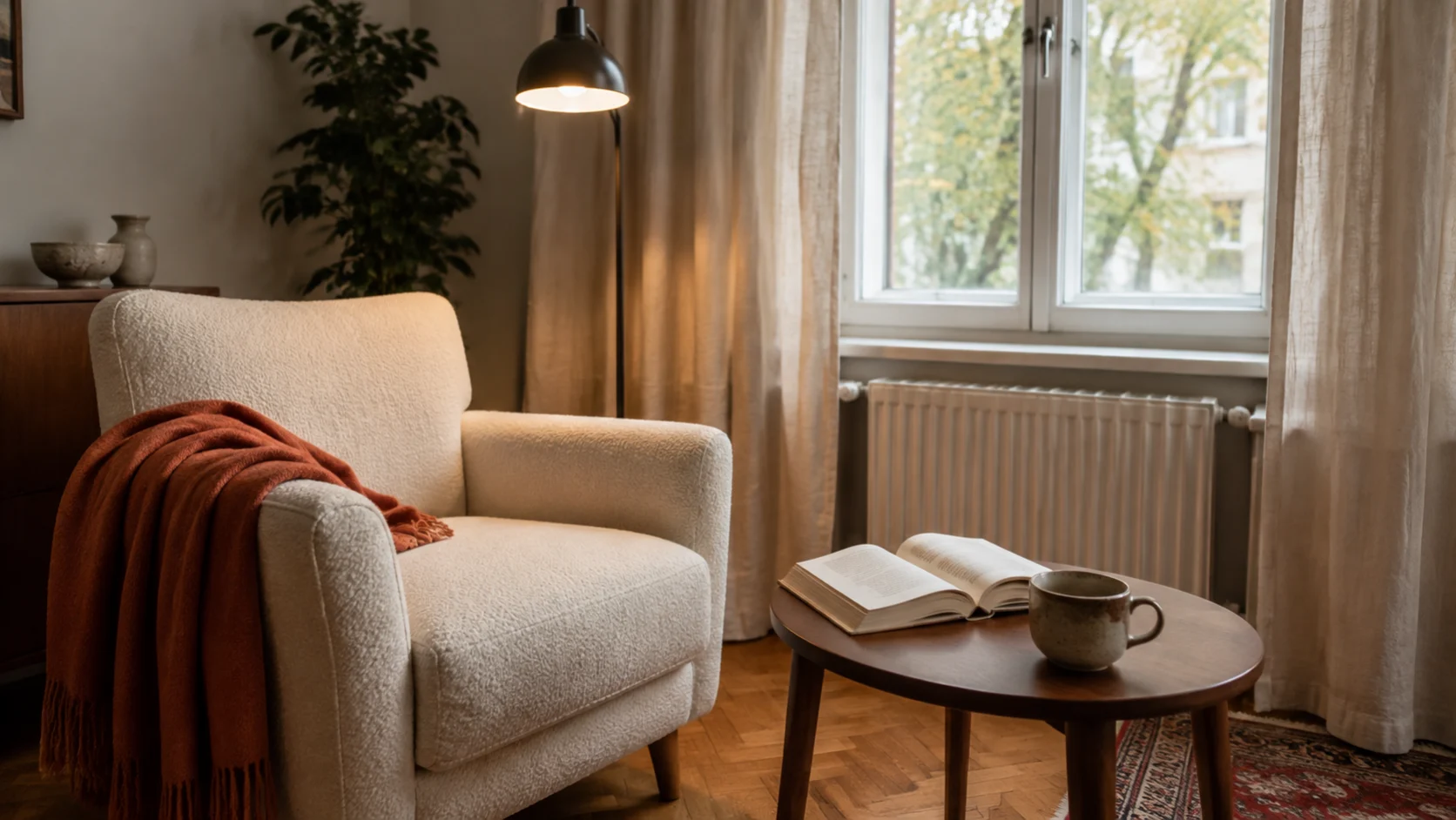
How do you plan extra heating for one room?
Think about when you use the room, where you sit and why that spot feels cold. A draughty window and a room left cold all day call for different attention. Then choose space for the heater and a comfortable thermostat setting. Energy use depends on power and actual heating time, rather than the time the device is switched on.
Make a plan for an ordinary evening
- Note when you enter and leave the room. An evening film means a shorter period of use than a home office occupied all day.
- Notice where the cold comes from. If you sit beside a window, try moving your chair farther into the room and check that the window closes properly.
- Choose a place for the heater and check its required clearances. Allow for the size of the appliance and the route of its cable.
- Judge the warmth from your usual seat. Note the thermostat setting and time of use, then use that as a reference for the next evening.
Turn watts into an energy figure you can follow
A 2000 W heating element has a power of 2 kW. Running continuously for half an hour, it uses 1 kWh: 2 × 0.5 = 1. If the thermostat switches it off during that period, actual heating time is shorter. Rated power alone therefore does not tell you a whole evening’s energy use.
- Compare evenings with similar weather and the same use of the room. Ceiling height, windows and insulation matter too.
- Keep portable heaters away from fabrics, connect directly to a wall socket and stay present during use.
Why does a thermostat matter?
It regulates heating when the selected temperature is reached. You do not have to keep switching the heater by hand as the room warms up.
Does higher power always use more energy?
For the same running time, it uses more. To compare a whole evening, you also need to know how long each heater actually heats.
Is floor area enough to describe my room?
Add ceiling height, window size, insulation condition and your desired temperature. Together, these give a more useful picture of the space.